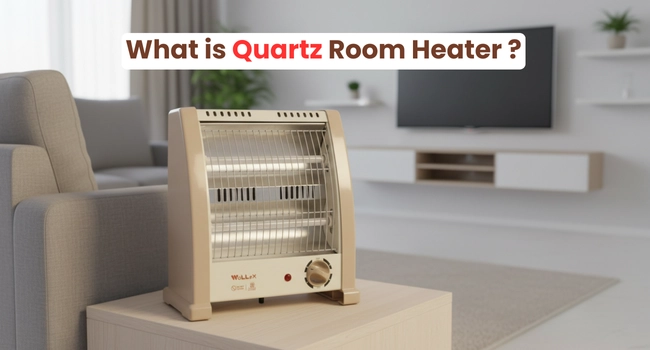
A quartz room heater is a small radiant heater that is powered by quartz tubes, providing fast focused heat to a small area or spot heating. An 800W room heater in this group is much sought after since it has a moderate power consumption and enough heat to be used over a small area i.e. in Indian bedrooms, study rooms or work areas.
A quartz room heater is an electric heater that heats with the help of infrared heat generated by internal coils, stuffed into quartz glass tubes. It does not warm air in a similar manner that a blower does but rather warms people and objects immediately before it.
The most significant features of quartz room heaters are:
Infrared waves in radiating heating.
Light emitting quartz tubes on turning on.
Small, light and in most cases silent.
In simple words, when you are close to a heater which is made of quartz, you can immediately feel the warmth on your skin, where it does not touch the warm air, yet the other part of the room is freezing.
Quartz heaters are not based on convection but on infrared radiation to pass heat. The knowledge of this mechanism will enable you to use them effectively and safely.
How the technology works:
Since quartz heaters does not target the air,
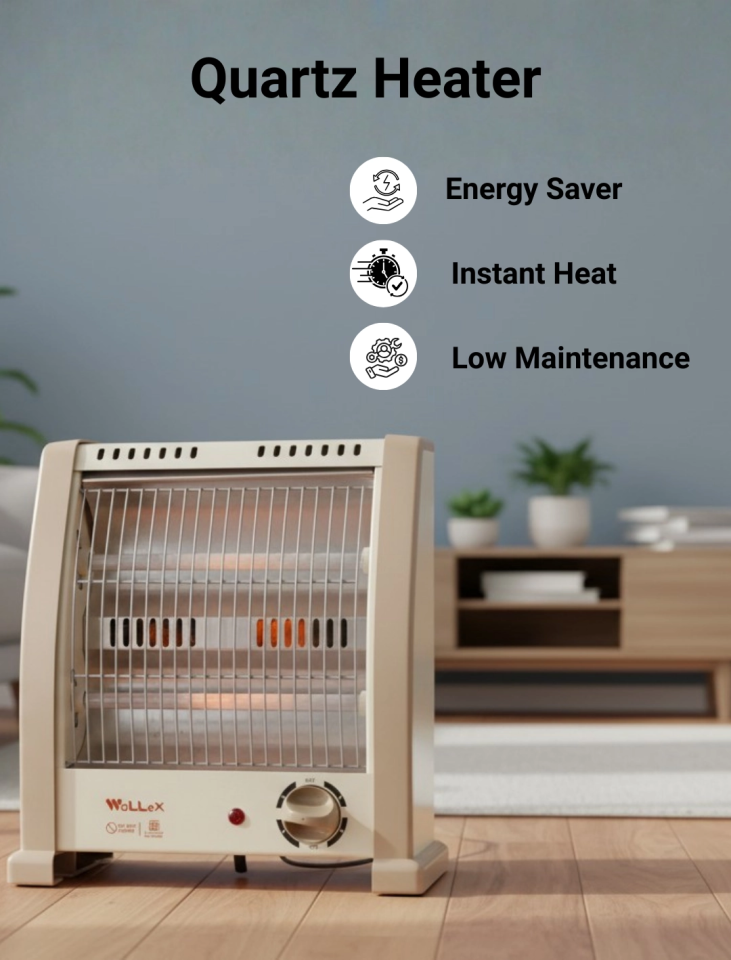
The home quartz room heater range is most commonly between 400-1200W with the 800W room heater having become a sweet spot to the Indian family.
The common characteristics of an 800W quartz heater:
Power: 800W total, frequently having two rods of 400W.
Heat range: 400W /800W with independent switches.
Heater: quartz tubes.
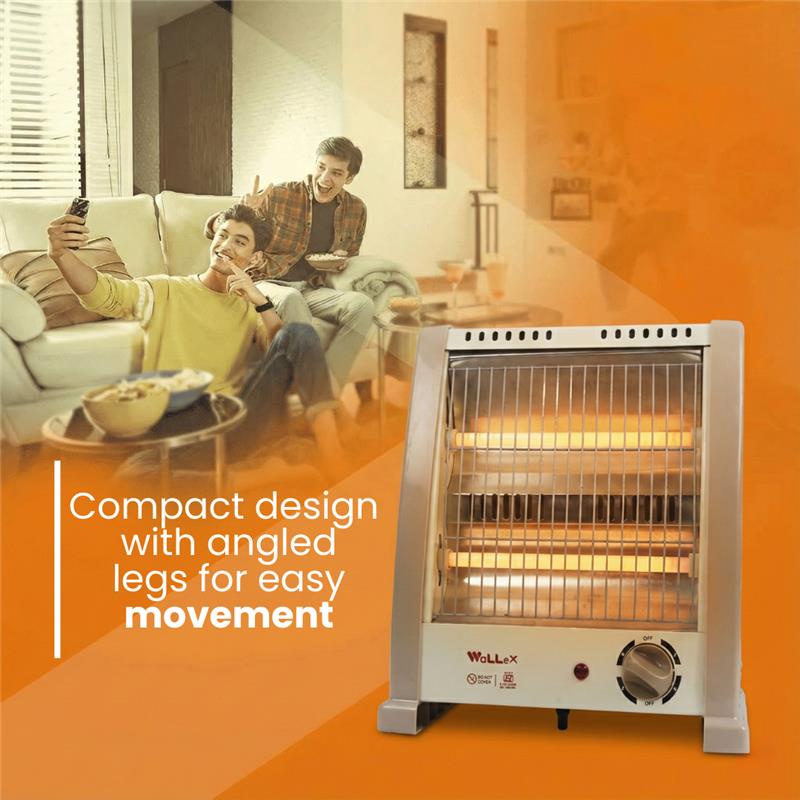
Design: small, portable, most of them do not have a fan.
Safety: may have tip-over switch; may or may not have thermostat.
An 800W quartz heater is a sensible combination of energy efficiency and comfort to many users, when located near the body as opposed to heating an entire room.
Different heater types suit different needs. The table below gives a practical comparison for home use.
|
Feature |
Quartz Room Heater |
Halogen Heater |
Fan/Convection Heater |
Oil-Filled Radiator |
|
Heating method |
Radiant (infrared, directional) |
Radiant (halogen tubes) |
Convection, heats hot air with fan |
Oil-filled fins radiate & convect |
|
Warm‑up speed |
Very fast |
Instant effect |
Moderate |
Slow to start but maintains heat long |
|
Best use |
Spot heating, small areas |
Spot & small rooms |
Medium rooms, quick air heating |
Continuous, all‑night room heating |
|
Coverage |
Focused beam |
Limited to moderate |
Better room‑wide coverage |
Excellent |
|
Noise level |
Silent (no fan) |
Silent |
Audible fan noise |
Silent |
|
Surface temperature |
Very hot grill, burn risk |
Very hot front area |
Hot outlet but usually guarded |
Body is warm but often safer to touch |
|
Energy efficiency |
Efficient for short, focused use |
Similar for spot heating |
Good for quick air heating |
Efficient for long, steady heating |
|
Typical wattage band |
400–1200W |
800–2000W |
1500–2000W |
1000–2500W |
Quartz room heaters have their own benefits that would work wonders in the appropriate setting, but not otherwise.
These advantages have made them favorable with tenants, students, aged users who sit in one place, and those who require a heater at a desk or bedside.
Main limitations:
If you want a compact personal heater, understand the quartz heater disadvantages, and are disciplined about safety, a quartz room heater is worth adding to your winter toolkit.
It is good for focused, budget-friendly, and instant warmth, a quartz room heater—especially an 800W model with dual heat settings.
Ans: Generally safe if used properly, kept away from flammable items.
Ans: Yes, it can heat small to medium spaces, best for spot or personal heating.
Ans: Limited coverage, dries air slightly, surface can get hot, and not ideal for large rooms.
Ans: No, for safety, turn it off while sleeping or use a heater with advanced safety features and timers.