
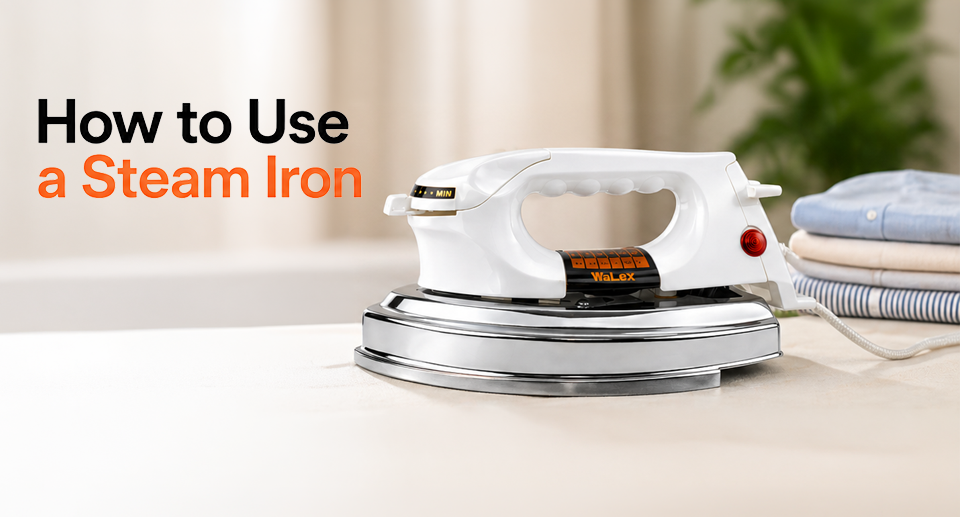
You are in a rush to get ready for a meeting, you're half-buttoned up, ironing is not going well, and your iron is taking an age to warm up? And you weren't using a steam iron if you have steam iron you would not be facing this situation.
Steam irons have been available for many years, but many either don't appreciate them or know how to use them. When operated properly, they're probably the most useful appliance in the house. Not glamorous. Not trending. Just quietly effective.
Dry irons flatten clothes by pressing with heat - something that can flatten threads, flatten clothes or leave a dull sheen in dark clothes.
Steam works differently. The steam passes through the fabric threads, but doesn't settle on them, loosening the threads. That's why the benefits of steam iron are more evident for stubborn wrinkles. It's not just ironing out the creases but It releases them. It is possible to steam up and down on delicate fabrics such as silk or linen blazers: no pressure, no loss of shine, no risk.
Read More: Dry Iron vs Steam Iron
Now you have steam iron how to use is what we will explain here. The common mistake people make: they fill the steam iron, turn the heat up to max and start steam ironing everything. This is the recipe for water marks on silk or shrunk collars on cotton.
When figuring out how to use a steam iron to iron clothes, adjust the iron to the fabric. Lots of steam for cotton, linen and denim. Cool iron and less steam for synthetics, or anything with embellishments. Read the instructions on your iron carefully.
A trick that people often don't think of: Iron from the inside out. Inside seams will indicate how the fabric reacts before you work on the outside. And - only use distilled or filtered water. Tap water deposits limescale which comes out as brown specks on your clothes.
It's not the price that counts, but the wattage (1500W to 2400W will get most jobs done), the ability of the soleplate to slide (ceramic or stainless steel is fine) and the volume of the tank (so you're not having to fill it up in the middle of a shirt).
A gravity-feed steam iron will be fine for home use. Steam generator irons (whose water tank is separate) are for heavy-duty. One little-known feature you should have: auto-shutoff. Forged-irons are a cause of house fires.
Some people say that "steam irons are good for wrinkles". But there's more to the benefits of using a steam iron.
Faster ironing: Steam relaxes fibers quickly. A "set in its ways" collar that might require four passes with a dry iron may require only one or two passes with steam.
Kills bacteria and allergens: High temperature steam kills bacteria, dust mites and allergens in fabric, making it a good choice for people with sensitive skin or allergies, and garments worn once and hung up to wear again instead of washing.
Less damaging to clothing: High heat dry irons weaken and fray fabric. Steam evenly heats the fabric, and so garments ironed with steam retain their shape and texture longer.
Sometimes you don't need an ironing board. The vertical steam function means you can freshen a jacket hung on a door, iron trousers hung on the back of the door, or iron a saree hung on the rod - no need to clear a table, ironing board or chair. In a small bedroom, this is a great feature.
Steam relieves odors, without rewash. Steam eliminates low levels of storage odors, sweaty wear or smoky air. Five minutes of steam will refresh a slightly musty blazer.
There are more applications for a steam iron than just ironing clothes. Steam Iron window drapes can be rejuvenated without removal; it helps in freshening up the curtains and removing their wrinkles without having to even remove them. Upholstered furniture responds well to light steaming for odor and minor wrinkle release.
The other steam iron use that you can do is to iron seasonal clothes before packing them. As these fabrics are more susceptible to mold and pests. Ironing these clothes before folding will eliminate surface moisture and bacteria.
The advantages of using a steam iron boil down to this: clothes will last longer and look better because the fibers are treated, not stretched. It's not a difficult device to master - but as with all things, it's those who make the time to understand it that get rewarded. Don’t use one setting for all types of clothes, read the instructions carefully and use appropriate settings according to the clothes, not only will your clothes look great you will save plenty of your time.
Ans: Steam ironing loosens fabric fibers using moisture and heat together, making it easier to remove stubborn wrinkles so clothes look smoother with less effort.
Ans: It depends on the fabric and finish you want. Steamers are gentler and ideal for delicate fabrics like silk or synthetics, and they’re quick for touch-ups. Irons, especially steam irons, give a sharper, crisp finish—perfect for formal wear like shirts and trousers. So steaming is convenient, but ironing is better for a polished look.
Ans: Yes, a garment steamer can effectively remove light to moderate wrinkles. However, for deep or set-in wrinkles, an iron usually works better.
Ans: Yes, you can use a steam iron without water—it will function like a dry iron. Just turn off the steam setting. However, you’ll lose the wrinkle-relaxing benefits of steam, so it may take more effort to get the same smooth result