
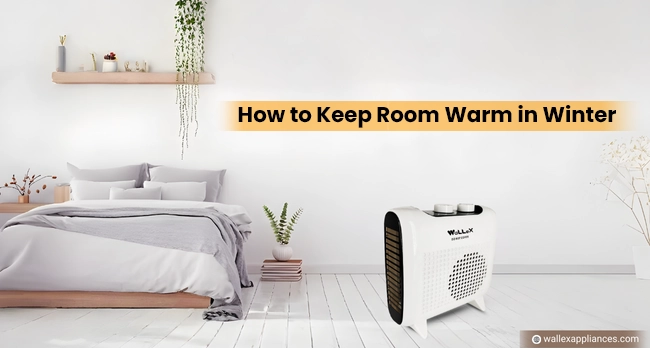
Winter brings the chill of cold in India with a range of mild Delhi fog to Himalayan frost; it is necessary to combine intelligent habits with trustworthy devices. Understanding how to keep warm room in winter begins with closing gaps and adding layers to your dresses, then wisely using certified heaters to keep the room at 18-22 degree Celsius without having electricity charges going through the roof. This manual presents new, realistic measures of saving energy up to 30% with a major emphasis on safety and sustainability.
Sealing the border of cold air will turn cold rooms into warm solitude. Install weather stripping where there are windows and doors, as well as foam seals where there are gaps, easy solutions that reduce heat loss by 20% in an average Indian apartment. Keep thermal curtains or worn woolen shawls when at night, to keep in the day sunshine, and put on jute carpets or coir mats when on the floor this will help in avoiding the tiles becoming cool. These easy and affordable methods ensure how to keep the room warm in winter without increasing the appliance runtime and the uninterrupted use.
Indian heaters Room heaters are the typical products of winter, but choose those that are marked with BIS/ISI, with variable thermostats and tip-over switches. Install them 1 meter beside beds, curtains, or flammables, on firm surfaces that are not near kids and pets. Fan heaters are used in small rooms 100 sq ft (warm-up quickly, 800-2000W), and the oil-filled heater radiate constant heat to large rooms without drying the air. Running costs are somewhere between 8-10 Rs/hour. When nobody is around, always turn off the power to avoid fire, which is a major rule in overcrowded urban living.
|
Heater Type |
Best For |
Wattage |
Hourly Cost (₹7/kWh) |
Key Safety |
|
Fan |
Small rooms |
800-1500W |
₹5-10 |
Overheat protection |
|
Oil-Filled |
Large spaces |
1500-2500W |
₹10-18 |
Tip-over switch |
|
Radiant |
Spot heating |
400-1000W |
₹3-7 |
No exposed elements |
The ISI-certified geysers (15-25L) with PUF insulation are used to warm water in 20-30 minutes; they are mounted 30 cm away from the walls in well-ventilated bathrooms. Storage models are good with families; instant heating models are good when you are single. Usually, heaters in families are required no longer than 2 hours a day and the electricity cost for running the appliance comes between 400-500 Rs per month, pairing with the low-flow heads can reduce usage by 40%. Preheat during off-peak hours for cost control.
BIS-approved 1.5-2L kettles (1500W) take 3 minutes to boil steam bowls that purify and passively warm air; they have auto-shutoff to eliminate accidents. Apply 4-5 times a day 2-3 per boil, descaling after a month will help increase efficiency 20 times, and this will help you in how to keep room warm in winter without heater.
Regular ventilation is very important in winters as well. Do it 10 minutes a day to keep off moisture, and reseal after that. Select 5-star BEE appliances: a 2000W heater if used for 4 hours/night/day will generate a rough electricity cost of 840 per month versus Rs 1200 cost generated by an unrated appliance. Smart plugs monitor consumption, solar preheats reduce daytime consumption in sunny areas.
Insulate with newspaper or bubble wraps on line walls in sub-10-degree Celsius areas; use salt sprinkle to take away the moisture from the floor. Timers conserve 25 percent of the energy used by hilly or northern households by keeping the temperatures at 20 degrees Celsius overnight.
The good insulation will play a significant role in keeping the room warm during winters. Other than the simple sealing, one can create several layers of insulation to common cold spots and reduce heat loss significantly. As an option, you can use foam sheets or reflective insulation films in windows and bare walls that reflect cold and interior heat back to the room. These low-cost solutions make the reliance on electrical heating devices less, and the cost of energy is minimized, but the spaces remain warm.
Thermal or blackout curtains would help immensely, particularly in houses with large windows that lose heat easily. These curtains act as a barrier of cold drafts. Combine pair window treatment with weather stripped window frames. On winter days when the sun is shining, shed the curtains to gain the natural warmth and close them as soon as the night comes to keep the heat inside.
Unwanted leaking of air can be avoided by routine maintenance of windows and doors. Fix cracks into wooden frames, change old seals, tighten hinges. To save money, draft stoppers or rolled towels at the bottom of the doors help in curbing cold air.
The use of heaters and appliances can be maximized by technology. Programmable thermostats allow pre-warming rooms to be occupied, as well as automatically shutting off the power and saving energy. The smart home gadgets combined with the energy monitoring applications can be used to detect how people use the heating, which can be used to promote efficiency.
Solar water heater and solar-powered room heater are also available as alternatives to conventional. Solar systems can be used to warm rooms or water during the day, which lowers the consumption of grid power in the evening. In conjunction with energy storage systems, solar heaters maintain endless warmth, which can be used in the areas that have abundant sunlight even during winter seasons.
The use of innovative insulation practices, improved furnishing designs and smart technology is a combination of the traditional and modern approaches to find answers to the question of how to keep your room warm in winter. Preventing heat loss and addition of safe energy-conscious appliances will enable Indian homes to have warm winters with the least environmental and financial implication.