Going to use an electric kettle for the very first time or you have just unboxed the brand-new item and now trying to figure out how to use kettle safely, in this simple guide we will explain all the details and provide you with safety tips for electric kettle use.
Kettles are just so simple — the first time you use one, there are a few questions that come to mind — that they don't need instructions. How many cups of water do you add? What will happen if you fill it too full? Why is it that it turns off automatically? If you've never used an electric kettle before, then you'll have a clear understanding of how by the end of this guide.
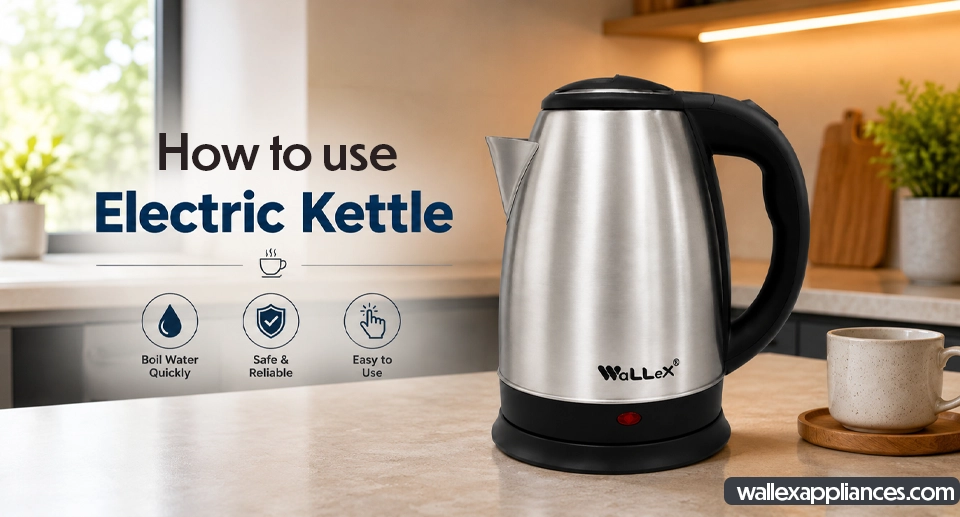
An electric kettle is a countertop gadget that is made to accomplish a single task to heat water quickly. Eliminate all the design details and each model has some common components.
It is a water container, typically stainless steel, glass or heat-resistant plastic, with two marks to indicate the minimum and maximum water level. Under or within that container is a heating element that is the actual way the water is heated when electric current passes through it.
Most kettles nowadays are cordless, meaning that the kettle body lifts off the base, thus you do not pour water any close to the plugged in cord.
Simple kettles come with only one switch. Other examples include different temperature settings for various drinks, such as Green Tea, or Coffee. Almost all contemporary electric kettles have automatic shut-off, which automatically switches off the heating element when the water boils, or when the kettle is removed from its pedestal. This is one of the reasons why electric kettles are safer and easier to use than the stovetop kettle.
Read More: How an Electric Kettle Works
Here's a short answer: Fill the kettle between the minimum and maximum level, set it properly on the kettle stand's base, turn it on and let it turn off automatically when needed, before pouring.
1. Place the kettle on a level, dry and flat surface. When the water is hot, a counter that's not rigid or a spot closer to the sink edge offers more opportunity to spill.
2. Remove the lid and fill with water. Fill with water from the tap or from a jug into the container.
3. DO not fill above or below the maximum and minimum levels. This is a mistake that beginners often make and is a very important part. An insufficient amount of water will also cause the heating element to overheat, because there isn't enough water to absorb the heat. If water is poured in too quickly it can spill or spit from the spout after the water begins to boil.
4. Securely close the lid. The lid can open and release the steam in an unpredictable manner and the automatic shut off may not detect the boiling water because many designs use a sensor located near the lid to detect steam.
5. Rest jug back in its power base, but not tilted.
6. Connect to and power on. The majority of kettles will have an indicator light that is on to show that this kettle is heating up.
7. Wait until the heating cycle is done. This may take a few minutes to a bit longer depending on how much water you add and the wattage of the kettle. Don't be tempted to open the lid in the middle to see how it's going.
8. Allow automatic shut off to be automatic. The kettle should shut off automatically when the water boils. If you want to get a full, steady boil, don't turn off the heat before the water comes to a boil.
9. Pour carefully. Grasp the kettle tightly, pour slowly and aim for the spout, avoiding your free hand and face, as the steam and first pour of water will be hottest.
The electric kettle is the one most household use to boil water for their tea, but that's not all
It is important to note that there is one difference here; an electric kettle is used to heat water. The use of that hot water thereafter, when it is poured over noodles, stirred into oats or used in a recipe, is a different thing. Not all kettles are suitable for holding food. Before adding anything else into the kettle, read the instructions of the appliance.
There are a few habits that will go a long way toward ensuring that kettles are safe.
Kettles are actually safe appliances if used appropriately. These aren't just the habits that keep it that way.
Drain any water after use, do not leave it in the vessel. Keep the lid open for a short time to allow the interior to dry out to avoid formation of mineral crust or musty odor.
Externally clean with a soft damp cloth, don't spray the exterior with water directly on the base or plug.
This will be seen as a white, chalky layer in the kettle over time particularly in hard-water locations. This is just a mineral scale and it's normal. Scrub the kettle every couple of weeks to a couple of months (often more frequently if you have very hard water), to ensure the kettle is working optimally and to prevent flaking from accumulating in your beverage.
Most manufacturers suggest using a water-white vinegar solution or a commercial descaling solution, soaking it, and then rinsing off the solution — but this varies by model; remember that materials and heating elements vary by manufacturer.
After a few times of use, using an electric kettle becomes a habit: fill the kettle with water between the two marks, place it on its stand, turn on and wait for the automatic shut-off to let you know when the boiling water has cooled. Pour the hot water carefully, while maintaining cleanliness of the appliance, and it will easily serve you teas, coffees, noodles and so on – for a long time!